

Food and Water for School Emergency Kits: The Complete GuideThursday, January 25, 2026 Food and water for school emergency kits should include at minimum one gallon of water per person per day and a 72-hour supply of non-perishable, ready-to-eat food for every student and staff member on campus. These quantities align with FEMA and Ready.gov baseline recommendations, though practical classroom implementation often requires a tiered approach combining portable immediate-use kits with larger centralized supplies. The difference between a well-stocked emergency kit and an inadequate one becomes painfully clear when thirty students find themselves confined to a classroom during a prolonged lockdown. Unlike household preparedness where a family of four can reasonably store gallons of water, schools face the logistical challenge of provisioning for hundreds or thousands of individuals across dozens of separate spaces. This reality shapes every decision about what goes into a school emergency kit, from the specific format of water storage to the allergen profile of emergency food bars. Schools that take emergency provisioning seriously understand that these supplies serve two functions. The obvious one is physiological sustenance—maintaining hydration and blood sugar levels during what could stretch from a few hours to several days. The less obvious but equally critical function is psychological—providing palatable foods during lockdowns supports student well-being and can help reduce panic and behavioral issues, as familiar routines aid stability in crises, AAP school mental health guidance. Table of content
Why "Good Enough" Isn't Enough for School SafetyThe fundamental challenge of school emergency preparedness lies in scale. A classroom teacher managing thirty students during a lockdown faces logistical constraints that simply don't exist in household emergency planning. Where a family can store a few cases of water bottles in a garage, a school must provision for an entire population distributed across multiple buildings, with supplies accessible from wherever students happen to be when an emergency strikes. This "crowd control factor" drives virtually every decision about school emergency food and water. Supplies must be pre-portioned to enable rapid, fair distribution without requiring teachers to measure, pour, or divide anything while simultaneously managing anxious children. They must be quiet to consume during lockdowns where silence could be a safety requirement. And they must be universally safe, accounting for the reality that a teacher may not know which students in their classroom have severe food allergies. The scenarios schools prepare for fall into two broad categories with very different supply requirements. Short-term emergencies like security lockdowns or brief power outages typically last a few hours, requiring supplies focused on comfort and basic hydration. Long-term emergencies following major natural disasters might require sustaining students for 72 hours or longer before families can retrieve them or external aid arrives. In these extended scenarios, school officials must ensure adequate emergency food water rations are accessible to all students and staff. Most experts recommend schools prepare for the longer scenario while recognizing that shorter incidents are statistically more common. The Water Strategy: The Priority
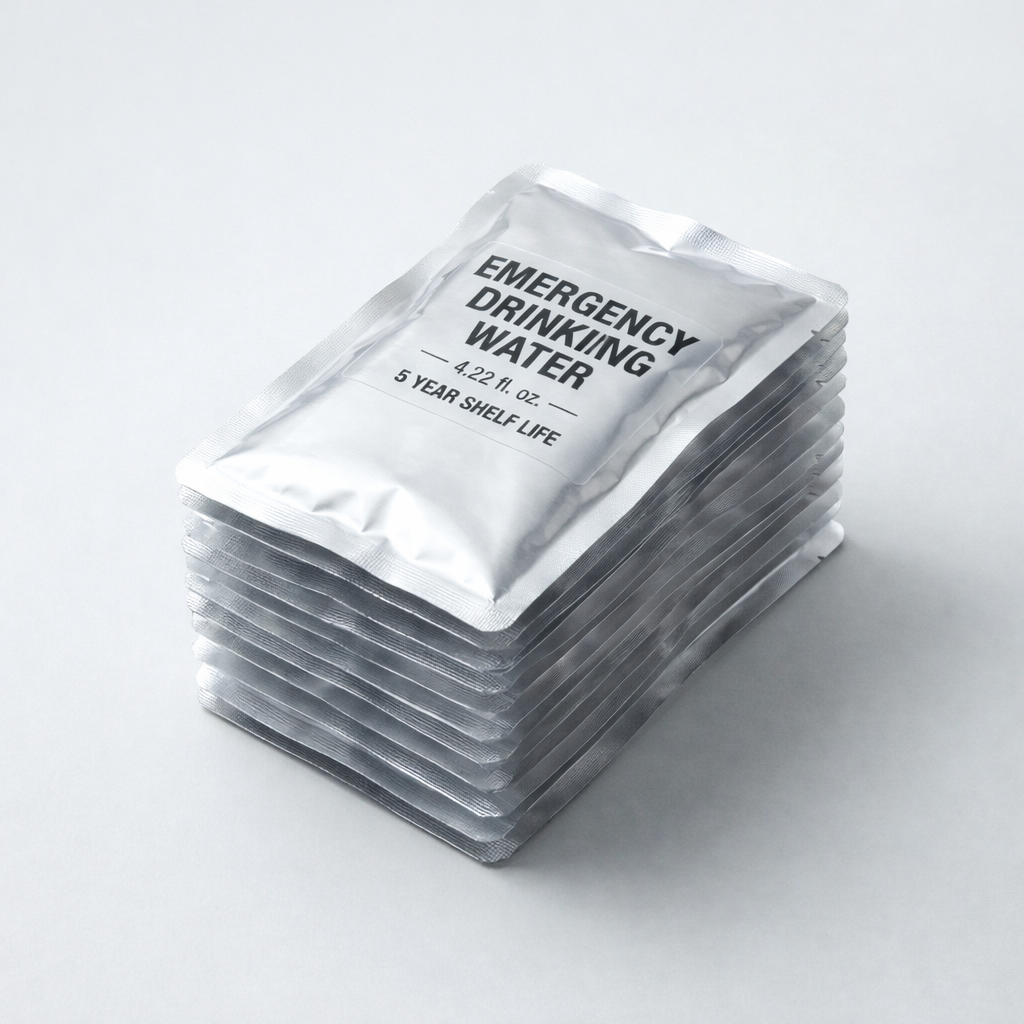
Water takes precedence over food in emergency planning for a straightforward physiological reason: children can tolerate missing meals far better than they can tolerate dehydration. The standard recommendation from Ready.gov calls for one gallon per person per day for drinking and basic sanitation needs, though schools often work with modified quantities due to space constraints. Calculating actual water needs for a classroom requires honest math. One gallon per student per day for thirty students over three days equals ninety gallons of water—roughly the weight of 750 pounds, stored in space equivalent to several large trash cans. Few classrooms can accommodate this volume. The practical solution involves a survival minimum of approximately one quart per student per day for classroom-level kits, supplemented by larger bulk supplies stored centrally in gyms, cafeterias, or dedicated emergency storage areas. Storage format matters enormously for distribution efficiency. Emergency water pouches (typically 4.2 oz each)—sometimes called water packs—have become the school standard because they offer portion control, five-year shelf life, and individual sealed packaging that eliminates sanitation concerns about shared cups or bottles. US Coast Guard approved water pouches withstand temperature extremes from -22°F to 149°F, making them viable for storage in non-climate-controlled spaces like storage closets or outdoor containers. The trade-off is volume: meeting even minimal hydration needs requires multiple pouches per student per day. Commercial water bottles offer familiarity but present significant drawbacks for school use. Shelf life typically runs only one to two years compared to five years for pouches, and bottles require more frequent rotation and monitoring. Glass is prohibited in most school settings, and plastic bottles stored in hot vehicles or unconditioned spaces can degrade, potentially leaching chemicals and developing off-tastes that discourage consumption. Large-format storage like 55-gallon drums provides economical bulk capacity for central emergency caches but creates distribution challenges during classroom lockdowns when students cannot access common areas. These drums require pumps, cups, and staff to operate them—resources that may not be available at each classroom location. The most effective approach combines individual pouches for immediate classroom use with larger containers for extended sheltering scenarios where students have consolidated to a central location. The Food Criteria: What Makes a "Classroom-Safe" Ration
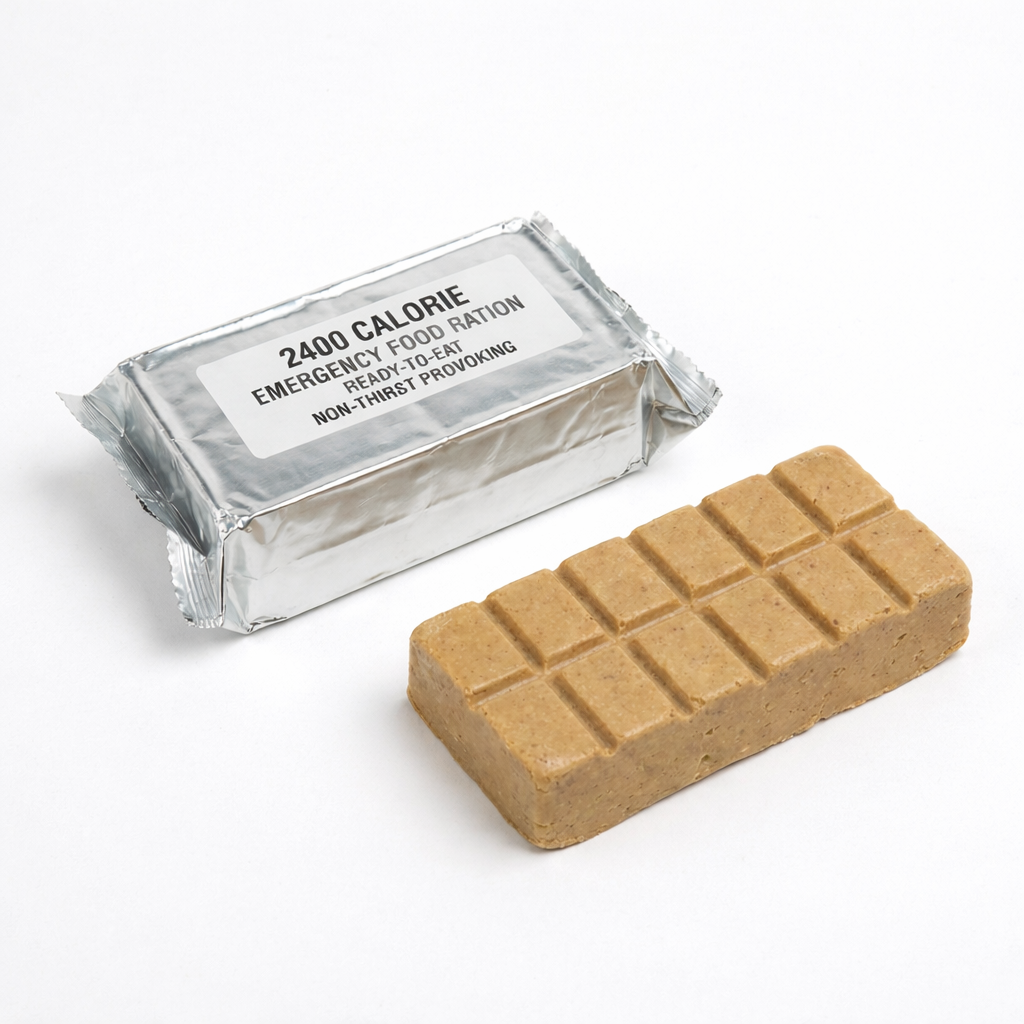
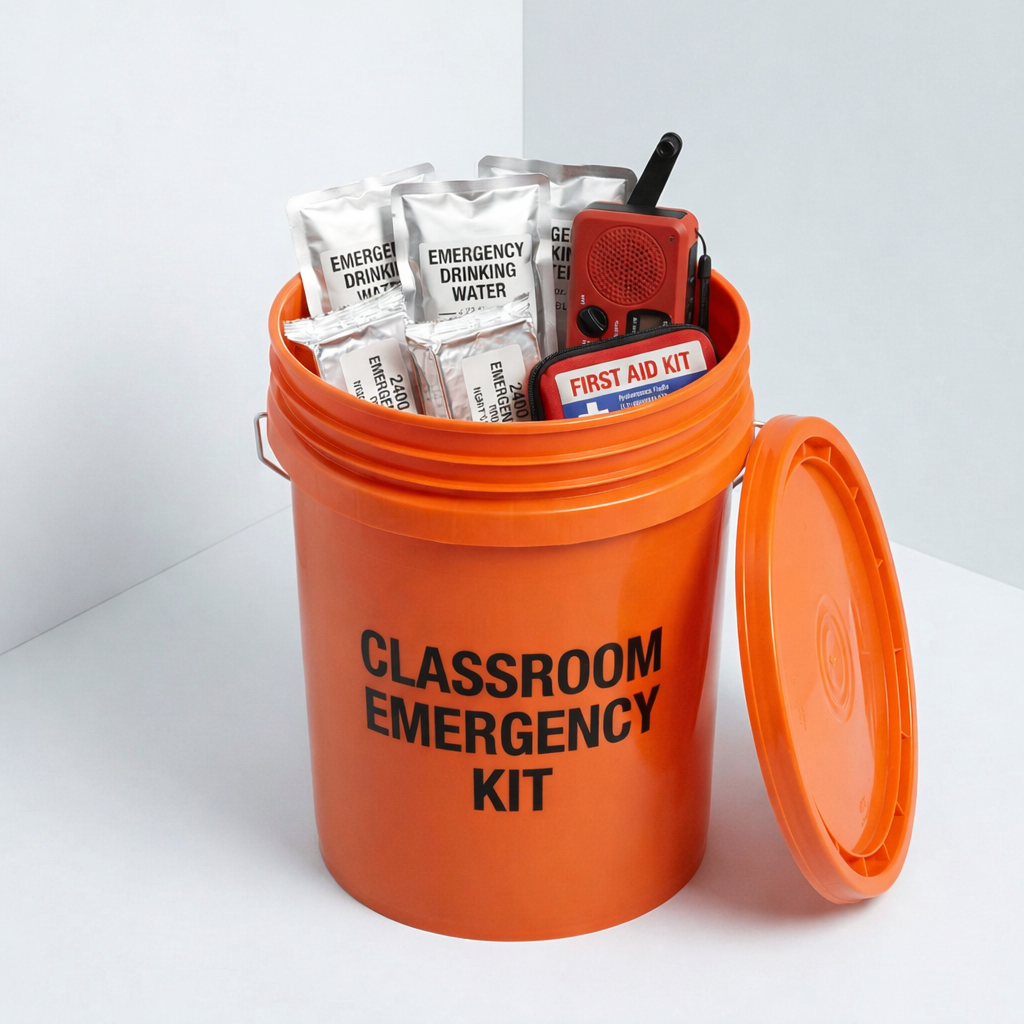
Emergency food for schools must satisfy constraints that don't apply to household preparedness. The three non-negotiable requirements that govern food selection are thirst management, preparation simplicity, and temperature stability. Thirst-inducing foods have no place in emergency kits where water supplies are limited. This eliminates most conventional shelf-stable snacks: salted crackers, pretzels, nuts, and jerky all increase water demand at precisely the moment when water is most precious. FEMA guidance specifically warns against salty foods in emergency situations, making the "non-thirst provoking" designation on emergency food bars a functional requirement rather than a marketing claim. Preparation requirements must be zero. Teachers managing thirty stressed children cannot boil water, operate can openers, or heat anything. Emergency food must be ready to eat directly from the package. This eliminates freeze-dried meals (requiring water and often heat), canned foods without pull-top lids, and anything requiring utensils. While non-perishable foods like canned goods have their place in central storage caches, the goal for classroom kits is food that a teacher can hand to a student who can immediately consume it without assistance. Temperature stability addresses the reality of where school emergency supplies actually get stored. Classroom closets, outdoor storage containers, and non-climate-controlled spaces can reach extreme temperatures during summer months or in certain climates. US Coast Guard approved emergency food bars are formulated and tested to remain safe and palatable across temperature ranges from -22°F to 149°F, making them suitable for virtually any school storage environment. The allergen consideration deserves special emphasis. With an estimated 13% of school-aged children having one or more food allergies, schools cannot stock emergency food that poses anaphylaxis risks to a significant portion of their population. Food safety in this context extends beyond preventing spoilage to ensuring no student faces a life-threatening reaction during an already stressful emergency. Most commercial emergency food bars are manufactured in peanut-free and tree nut-free facilities, though coconut (technically classified as a tree nut by the FDA) appears in some formulations. Schools with students who have severe coconut allergies should verify ingredient lists and consider stocking alternatives for those specific individuals. The CDC's Voluntary Guidelines for Managing Food Allergies in Schools emphasize the importance of having identified alternatives available for students with known allergies. The Ultimate Classroom Food ListHigh-calorie emergency food bars represent the foundation of school emergency food supplies. These bars, typically available in 2400-calorie or 3600-calorie packages, are specifically formulated for emergency use with five-year shelf lives and non-thirst provoking formulations. A 2400-calorie package divided into six 400-calorie portions provides approximately two days of survival-level calories per student (around 1200 calories per day being a minimum for maintaining energy during a crisis). The flavor profile of emergency rations matters more than it might seem. Children under stress may refuse unfamiliar or unpleasant-tasting food even when hungry, and "flavor fatigue" from chalky or artificial-tasting bars can reduce consumption over multiple days. The sweeter, cookie-like formulations tend to achieve better acceptance among younger students. Schools serving older students may find the more neutral bars acceptable, while elementary schools often prefer the fruit-flavored options. Supplementary "normalcy" items can significantly improve morale and consumption during extended emergencies, though they require more frequent rotation due to shorter shelf lives. Canned fruits with pull-top lids provide hydration, sugar for quick energy, and familiar comfort. Applesauce pouches offer vitamin C and the psychological benefit of food that looks like something from a lunchbox rather than a survival kit. These items should complement rather than replace emergency food bars, as they lack the temperature stability and extended shelf life that makes bars the backbone of emergency supplies. Beef jerky and meat sticks offer protein for satiety and can help older students feel more satisfied than carbohydrate-heavy bars alone. However, sodium content requires careful consideration—most jerky products are high in salt, which increases thirst and water consumption. If including protein snacks, select lower-sodium varieties and ensure adequate water supplies are available. Reserve these items for situations where water is not critically limited, or stock them in central supplies rather than space-constrained classroom kits. Psychological comfort foods serve a specific function in emergency planning that goes beyond nutrition. Small comfort items such as candy can be soothing during high-stress events, especially for younger children, according to the American Academy of Pediatrics. Hard candy and lollipops provide several benefits during lockdowns: they occupy mouths (reducing talking that could be dangerous during certain emergency scenarios), provide quick blood sugar boosts, and offer a familiar comfort that can calm anxious children. A small supply of individually wrapped hard candies stored with emergency food can provide outsized psychological benefits relative to their caloric contribution. DIY Kits vs. Pre-Made SolutionsThe decision between assembling emergency kits from individual components versus purchasing pre-made classroom kits involves trade-offs that extend beyond initial cost. Building kits in-house offers apparent cost savings and theoretically unlimited customization. A school purchasing food bars, water pouches, sanitation supplies, and storage containers separately can often achieve a lower per-kit cost than commercial alternatives. However, the hidden costs of DIY approaches frequently erode these savings: staff time for assembly, complexity of tracking multiple expiration dates across different products, inconsistency between kits assembled by different people, and the difficulty of establishing organization-wide standards when each school or classroom might have assembled supplies differently. Proper food dating and rotation management becomes a significant administrative burden when components have varying shelf lives. Pre-made classroom kits from suppliers like SOS Products address these challenges by providing single-expiration-date packages where all components expire simultaneously, eliminating the tracking complexity of mixed-date inventories. These kits typically arrive in stackable, labeled containers designed for easy storage and identification during emergencies. They standardize contents across a district, ensuring every classroom has equivalent supplies regardless of which teacher or administrator assembled it. The total cost of ownership calculation often favors commercial kits despite higher purchase prices. Purchasing a pre-made kit might be more cost-effective when considering the value of your time and the comprehensive nature of these kits [First Aid Kits vs. DIY Medical Kits], especially for schools with limited administrative resources. Schools with limited budgets may benefit from a hybrid approach: purchasing pre-made kits for food, water, and medical supplies (where standardization and shelf life matter most) while assembling non-perishable components like blankets and sanitation buckets in-house. Storage, Rotation, and Maintenance
The "five-year cycle" strategy aligns emergency supply rotation with other institutional calendars. Many schools find it practical to synchronize emergency kit replacement with accreditation cycles, school bond measures, or other predictable five-year planning horizons. When emergency food and water purchases coincide with larger administrative planning cycles, budgeting becomes more predictable and replacement is less likely to be forgotten. Storage location decisions balance accessibility against space constraints. Classroom-level storage (under teacher desks, in designated closet areas, near classroom doors) ensures supplies are immediately available during lockdowns when students cannot leave their rooms. These in-classroom supplies should prioritize the first hours of an emergency: water pouches, food bars, sanitation supplies, and basic lighting. Central storage in gyms, cafeterias, or dedicated emergency areas houses larger quantities for extended scenarios and for populations that might consolidate (such as students gathered for assembly when an emergency strikes). Some schools also maintain outdoor survival caches in weatherproof containers for evacuation scenarios where students must shelter outside buildings. Environmental protection extends shelf life and prevents supply loss. Mylar bags provide an essential moisture and oxygen barrier for food stored in non-sealed containers. These metallized polyester pouches block light, air, and humidity—the three primary enemies of long-term food storage. Schools storing bulk food bars or supplementary items should consider repackaging in Mylar with oxygen absorbers for maximum longevity. Food-grade buckets with gamma seal lids or tight-fitting snap lids protect against rodents and insects while providing stackable, labeled storage. The five-gallon bucket has become a de facto standard for classroom emergency kits because it serves dual purposes: storage container and emergency toilet base when fitted with appropriate seat attachments. Ensure any buckets used for food storage are specifically rated as food-grade (typically marked with recycling codes 1, 2, 4, or 5) to prevent chemical leaching. All storage locations should be cool, dry, and dark to the extent possible. Avoid placement near heating vents, in direct sunlight, or in areas prone to flooding. Properly rated emergency food and water can tolerate considerable temperature variation, but cooler storage temperatures consistently extend actual shelf life beyond labeled minimums. Documentation systems prevent the common failure mode of forgotten expiration dates. A simple spreadsheet or calendar system tracking expiration dates by location enables proactive replacement before supplies become unusable. Annual inspections (often scheduled for the beginning of each school year) should verify that supplies remain sealed, accessible, and within their shelf life. Some schools assign this responsibility to specific staff members or make it part of standard facilities management routines. Essential Non-Food Additions
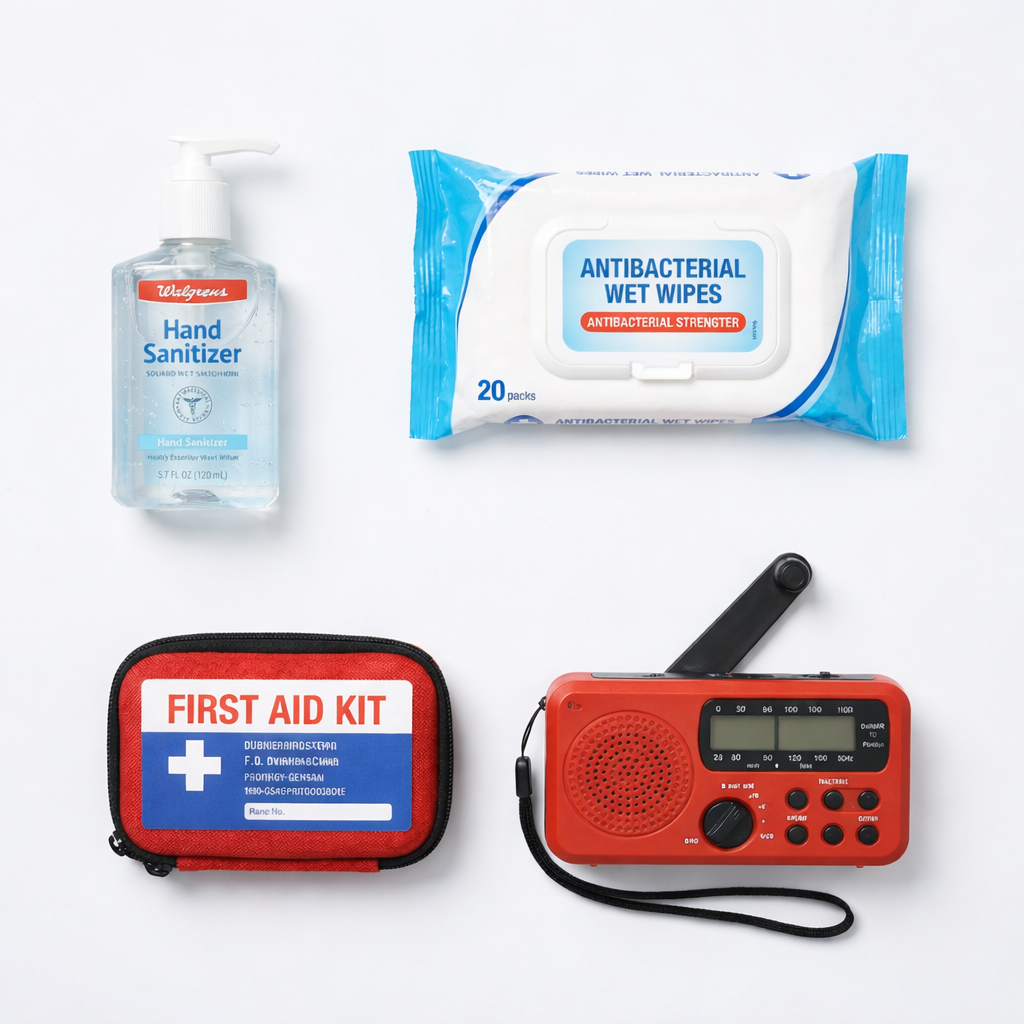
Sanitation supplies transform emergency kits from basic sustenance packages to functional self-contained systems. Hand sanitizer with at least 60% alcohol content enables hygienic food consumption when handwashing facilities are unavailable. Wet wipes serve multiple purposes including hand cleaning, face wiping, and surface sanitation. These items are not optional supplements but essential components that prevent the illness and discomfort that dirty conditions would otherwise create during extended confinement. Beyond sanitation, comprehensive classroom emergency kits should include first aid kits stocked with basic first aid supplies for treating minor injuries—bandages, antiseptic wipes, and gauze. Many school districts now also include bleed control equipment such as tourniquets and hemostatic dressings to address more serious trauma. A crank radio light provides both emergency communication capabilities and battery-free illumination, essential for maintaining situational awareness during power outages. These additions—while not directly related to food service—support the overall emergency response that enables safe eating and drinking. Waste management becomes critical during any lockdown lasting more than a few hours. Five-gallon buckets with snap-on toilet seat lids, combined with waste solidification bags and deodorizing powder, provide dignified sanitation options when students cannot access restrooms. These systems are particularly important for younger students who may have limited bladder control and for emergencies of uncertain duration. Trash bags for containing other waste, soiled supplies, and food packaging help maintain a sanitary environment and reduce odors that could cause distress or nausea. The connection between sanitation and food consumption is direct: students who feel dirty, who have been unable to use appropriate toilet facilities, or who are confined in spaces with uncontained waste will have difficulty consuming adequate food and water. Maintaining dignity and hygiene during emergencies isn't merely a comfort consideration—it directly affects students' willingness and ability to consume the sustenance they need. Printable Checklist & Rotation LogEffective emergency preparedness requires systematic tracking. Download and print the accompanying School Emergency Kit Checklist & Rotation Log to maintain inventory of classroom supplies, track expiration dates, document students with food allergies, and log inspection history. The checklist includes:
Post one copy inside each emergency kit container and maintain a master copy in the school office for administrative tracking. Frequently Asked QuestionsFAQHow much water should a school store per student for a 72-hour emergency?The baseline recommendation is one gallon per student per day, totaling three gallons per student for a 72-hour period. This quantity accounts for drinking, basic hygiene, and some margin for loss or increased needs due to heat or activity. In practice, most schools cannot store this volume in every classroom and instead maintain a tiered system: individual water pouches providing minimal immediate hydration in classroom kits (typically 2-4 pouches per student providing 8-16 oz per day), supplemented by bulk water storage in central locations accessible during extended sheltering scenarios. Schools should calculate their total on-campus population (students plus staff) and ensure aggregate storage across all locations meets or approaches the one-gallon-per-person-per-day standard. What is the shelf life of emergency food bars and water pouches?US Coast Guard approved emergency food bars and water pouches typically carry five-year shelf lives from the date of manufacture. Some products, such as certain Mayday food bars and Blue Can water, extend to ten years or longer (Blue Can claims a 50-year shelf life due to its aluminum packaging and oxygen-free sealing process). Schools should note that shelf life begins at manufacture, not purchase, so supplies purchased near the end of distribution chains may have less remaining life than expected. Most emergency preparedness experts recommend inspecting supplies annually and replacing items within six months of their expiration dates to ensure they remain fully effective when needed. Are emergency food bars safe for children with food allergies?Most commercial emergency food bars are manufactured in peanut-free facilities and do not contain tree nuts, making them safe for the majority of students with nut allergies. However, some products contain coconut (technically classified as a tree nut by the FDA) or wheat. Schools should review ingredient lists and manufacturing certifications for their chosen products and maintain designated alternatives for students with known severe allergies. CDC guidelines recommend that schools identify students with food allergies before an emergency occurs and ensure appropriate alternatives are available in locations where those students would shelter. Several brands, including Mayday, offer vegan formulations suitable for students with dairy allergies or dietary restrictions. What does "non-thirst provoking" mean for emergency food?The non-thirst provoking designation indicates that a food product has been formulated to avoid increasing the consumer's need for water. This characteristic is achieved through specific ingredient selection (avoiding high sodium content), moisture level control, and formulation testing. Emergency food bars with this designation were originally developed for maritime survival situations where drinking water is extremely limited, making them ideal for school emergencies where water supplies may need to stretch for extended periods. Foods that provoke thirst—such as salted crackers, nuts, jerky, or many conventional snack foods—are inappropriate for emergency kits because they increase water consumption precisely when conservation matters most. How often should schools check and rotate emergency supplies?Schools should conduct visual inspections of emergency supplies at minimum twice per year, with many experts recommending quarterly checks. Comprehensive reviews—including verification of expiration dates, seal integrity, and quantity accuracy—should occur at least annually, often scheduled for the beginning of each school year. Some schools integrate emergency supply checks into routine safety drills or facility inspections. Supplies approaching expiration (within six months) should be scheduled for replacement, and schools with rotating staff should ensure supply management responsibility is formally assigned to prevent institutional memory failures. Many commercial emergency kit suppliers offer replacement and replenishment programs that can simplify rotation logistics. Can schools use regular bottled water instead of emergency water pouches?Regular bottled water can serve as emergency water supplies but presents significant disadvantages compared to purpose-designed emergency water pouches. Standard water bottles typically carry shelf lives of only one to two years, requiring more frequent rotation and monitoring. They are not rated for temperature extremes and may degrade when stored in non-climate-controlled spaces (common for school emergency supplies). Larger bottles create distribution challenges during classroom lockdowns, requiring cups and creating sanitation concerns about shared containers. Emergency water pouches, while more expensive per ounce, offer five-year shelf lives, extreme temperature tolerance, individual portion control, and sanitary single-use packaging that eliminates sharing concerns. The convenience and reliability advantages generally justify the cost premium for school applications. What should schools do about students with diabetes during emergencies?Students with diabetes represent a population with heightened emergency nutrition needs. While most students can tolerate reduced caloric intake during short-term emergencies, diabetic students may experience dangerous blood sugar fluctuations without regular food intake. Schools should identify diabetic students before emergencies occur and ensure glucose tablets, appropriate snacks, and any necessary supplies are included in classroom emergency kits where those students typically locate. Emergency plans should address medication storage and administration, and staff should receive training on recognizing and responding to hypoglycemic and hyperglycemic episodes. The FEMA guide for schools emphasizes that food becomes a higher priority for students with medical conditions requiring regular nutrition. Emergency food and water in school settings serve purposes beyond basic sustenance. They are tools for maintaining order, reducing panic, and preserving the psychological stability that allows teachers to manage large groups of children through frightening situations. The investment in proper provisioning pays dividends not only in the rare event of an actual emergency but in the confidence it provides to staff, parents, and students that their school takes safety seriously. A well-stocked, properly maintained emergency supply system demonstrates institutional competence and care. Start with the fundamentals: water pouches and food bars with five-year shelf lives, stored in accessible locations with clear rotation schedules. Build from there based on your school's specific risks, population, and resources. The goal is not perfection but preparedness—supplies that will actually be there, actually be usable, and actually sustain your students when they need them most.
DisclaimerThis information is provided for general awareness and planning purposes. For emergencies, contact local emergency services immediately. Emergency preparedness procedures and regulations vary by location and change over time. Schools should verify current requirements with their state education agency, local emergency management office, and relevant authorities. Consult qualified safety professionals and follow your district's specific emergency operations plans when implementing emergency preparedness measures. Content TransparencyThis article was human-authored by the SOS Products team based on over 30 years of real-world experience and trusted resources in the emergency preparedness field. |
.jpg)