
|
sunday, April 26, 2026 Emergency Kits for Schools — The Complete Guide to Building, Stocking & Maintaining Them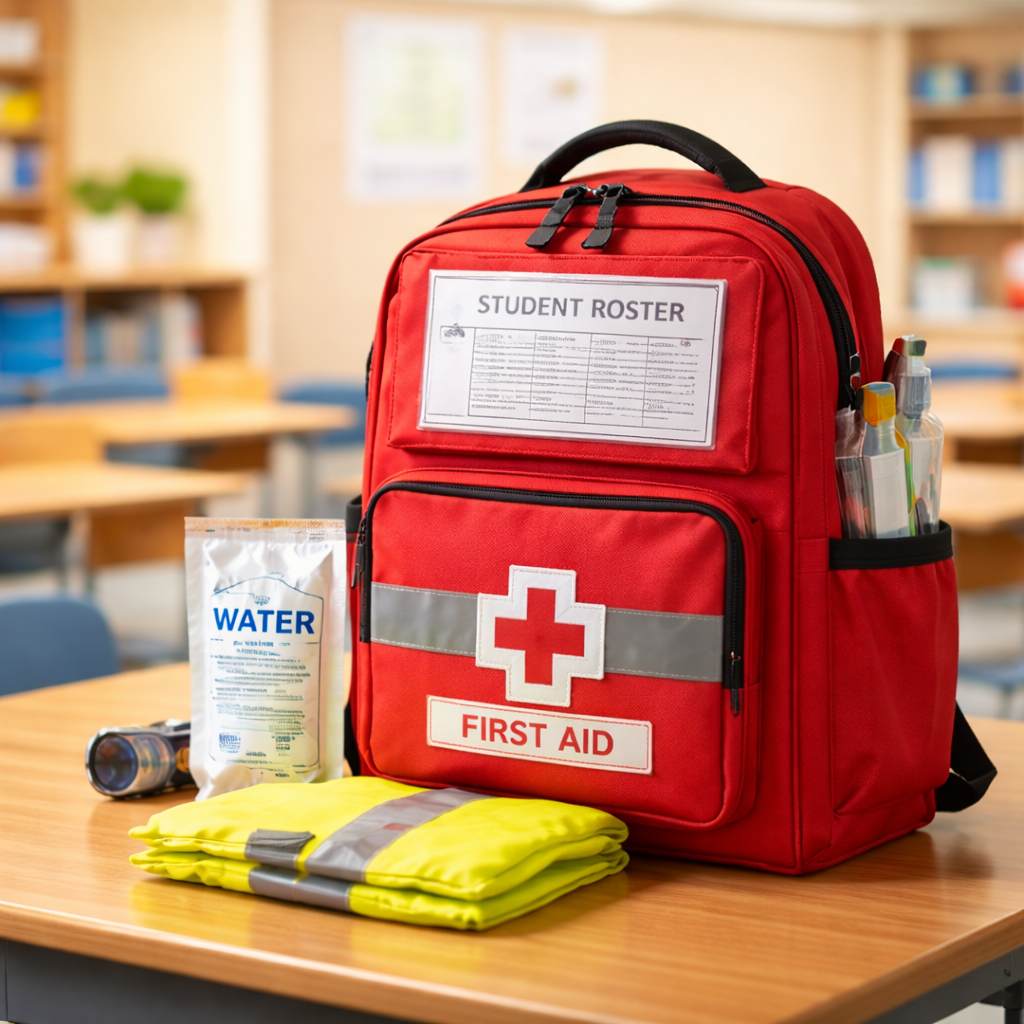
Emergency kits for schools are purpose-built supply systems designed to keep students and staff safe when a crisis hits campus. A well-stocked kit covers the essentials: medical supplies, food and water, and communication tools that work when normal infrastructure fails. To stay effective, kits need regular inspection for expired items and should account for the specific needs of the students they're meant to protect. Table of content
Why Every School Needs a Properly Maintained Emergency Kit
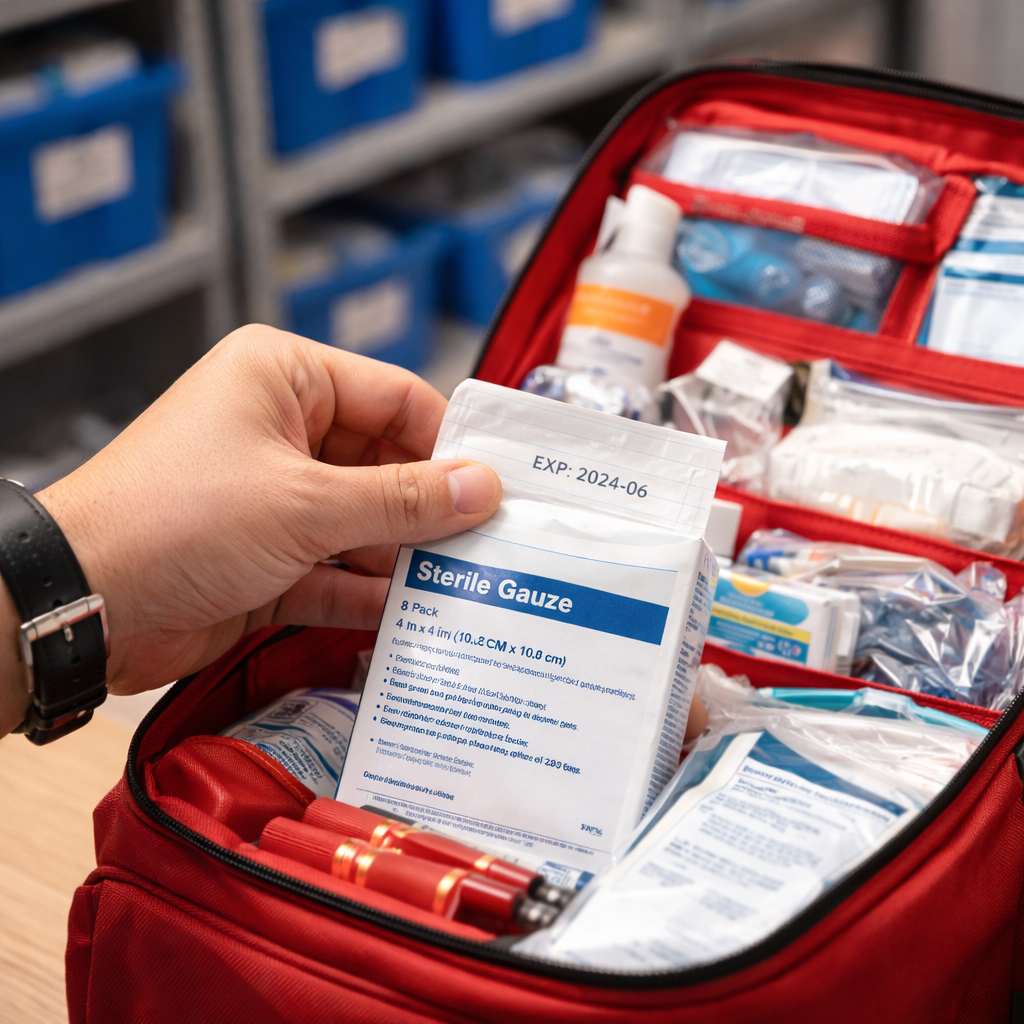
Emergency supplies for schools serve a function that goes beyond regulatory compliance. They represent the school's ability to protect students and staff during the window before external emergency resources arrive and assume control. A properly maintained kit is one of the few preparedness resources a campus controls entirely on its own. The legal and ethical duty of care for students and staffStudent safety is the foundation that every emergency preparedness decision rests on. Schools hold a recognized duty of care toward everyone on campus during school hours. This duty has both legal and ethical dimensions. Legally, tort doctrine identifies "a school with its students" among the special relationships that create affirmative obligations to act reasonably within the scope of that relationship. Ethically, families entrust schools with the physical safety of their children for six or more hours a day. OSHA's General Duty Clause reinforces this at the workplace level, requiring employers to maintain a workplace free from recognized hazards likely to cause serious harm. While that provision doesn't prescribe specific kit contents, it establishes a baseline expectation: foreseeable hazards require reasonable mitigation. For schools, the hazards are well-documented — natural disasters, medical emergencies, extended lockdowns — and the expectation to prepare for them is clear. State law in many jurisdictions goes further. Louisiana Revised Statute § 17:416.16, for example, requires every public school principal to prepare a crisis management and response plan with local emergency officials, review and revise it at least once annually, submit it to the superintendent, and conduct a safety drill within the first 30 days of each school year. Requirements vary by state, but the legislative direction across the country is consistent: documented planning, annual review, and staff training are baseline expectations — not elective enhancements. What happens when emergency kits are outdated or incompleteThe most common failure mode in school emergency preparedness isn't procurement — it's maintenance. Kits get purchased with grant funding, placed in a storage closet, and left untouched for years. By the time they're needed, the supplies inside have degraded. Water stored in containers that haven't been refreshed can become contaminated or insufficient. Food rations past their shelf life may be inedible. Batteries left in devices for years can leak, destroying flashlights, radios, and other communication equipment. First aid supplies that haven't been checked for expiration lose their reliability precisely when reliability matters most. The administrative contents of a kit are equally perishable. A student roster printed in September is meaningfully inaccurate by February — students transfer, medical conditions change, emergency contacts update. Reunification protocols that rely on outdated rosters create accountability failures at the worst possible moment. The cost of maintaining a kit is a fraction of the cost of an emergency that goes wrong because supplies weren't there. What Goes Into a School Emergency Kit
A school emergency kit is best understood as a system, not a single bag. Federal guidance from the U.S. Department of Education encourages schools to think in terms of multiple kit types — classroom-level kits, portable go-kits, and campus-wide supply caches — each matched to the scenarios they're most likely to serve. Minimum Viable School Emergency Kit (Baseline Standard)For schools building or upgrading their emergency preparedness program, a baseline standard helps translate guidance into action. This is the minimum level of readiness most schools should meet before adding advanced capabilities. Baseline (72-hour readiness, all-hazards approach):
This baseline assumes general staff awareness but not specialized medical training. It prioritizes survivability, accountability, and operational continuity during the first phase of an emergency. Advanced / High-Readiness Kit (Optional Upgrade Tier)Schools with higher risk exposure, larger populations, or trained personnel may extend beyond baseline preparedness. Advanced readiness includes:
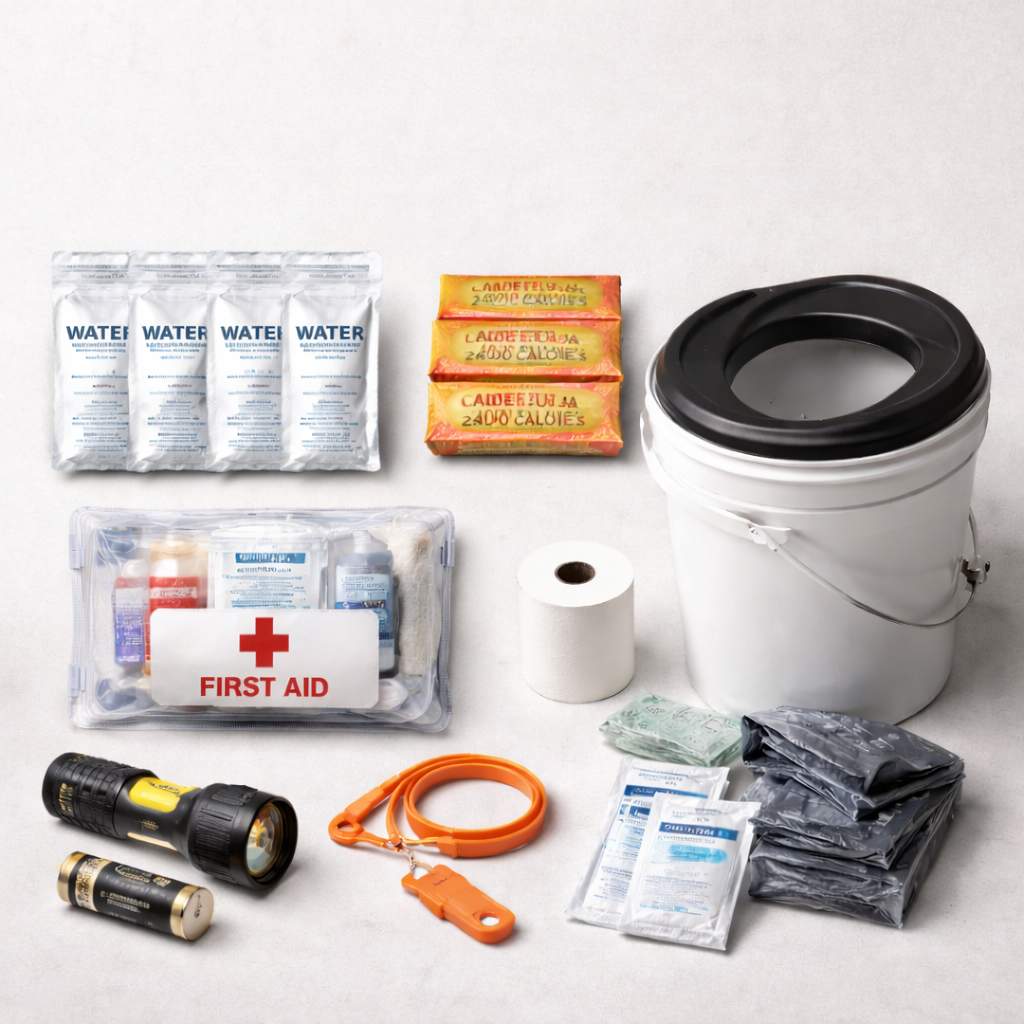
This level is appropriate where staff training, infrastructure, and budget support increased complexity. The non-negotiable essentials every kit must haveAcross federal emergency management guidance, public health recommendations, and school-specific go-kit frameworks, the core categories remain consistent regardless of school size or geography: Water and hydration. Water is the anchor item in any emergency kit. Without it, everything else becomes secondary quickly. Every kit tier — classroom, go-kit, and campus cache — needs a water component scaled to its intended use. Shelf-stable food. Non-perishable, ready-to-eat food that requires no preparation and accommodates common dietary restrictions. Nut-free formulations matter in a school population. First aid supplies. At minimum: bandages, gloves, antiseptic supplies, cold packs, and a first aid guide. The specific contents should reflect the school's hazard assessment and the training level of staff who will use them. Lighting and power. LED flashlights, extra batteries, and ideally a battery-powered or hand-crank NOAA weather radio. Power outages accompany almost every major emergency scenario. Communication and signaling. Whistles, two-way radios, and a bullhorn or megaphone for the administration kit. Communication devices should work without a functioning cell network. Sanitation supplies. A portable toilet option (a 5-gallon bucket with appropriate liners and a privacy option), toilet paper, hand sanitizer, and wipes. Extended lockdowns or shelter-in-place events make sanitation a genuine operational challenge, not a secondary concern. Critical documents. Hard copies of current student rosters, emergency contacts, medical alerts, site maps, and reunification forms. Digital systems fail during power outages and network disruptions. Physical copies are the backup that actually works. Basic tools and protective gear. Duct tape, plastic sheeting, a multipurpose tool, and work gloves. These cover the widest range of scenarios with minimal storage footprint. Items that are commonly forgotten — but critically importantThe items that get missed most often aren't obscure — they're overlooked because they don't fit neatly into the "food and water" mental model of emergency preparedness. Administrative and accountability documents. Current rosters, student ID systems, sign-out forms, and reunification protocols aren't paperwork — they're operational tools. A kit without current documentation creates accountability gaps that are difficult to close during an active emergency. Staff identification. High-visibility vests for teachers and administrators appear repeatedly in federal go-kit guidance. When first responders arrive, visible role identification prevents confusion and speeds coordination. Special needs provisions. Students with specific medical, mobility, or communication needs require tailored supplies. These should be documented and integrated into classroom kits, not handled as an afterthought. Trauma kit basics. A basic first aid kit handles scrapes and sprains. A trauma kit goes further — tourniquets, hemostatic gauze, and chest seals for scenarios where bleeding control is the difference between life and death. Whether a classroom kit needs full trauma capability depends on staff training, but the consideration belongs in the planning conversation. Comfort items for students. Quiet activities, books, and comfort objects become important during extended shelter-in-place events, especially for younger students. They're also the items most likely to be cut from a budget-constrained kit list — and most likely to matter in an actual lockdown. Sanitation infrastructure. A bucket is the starting point. Liners, deodorizer, privacy sheeting, and a waste-handling plan complete it. Half-measures on sanitation create compounding problems in a confined space over time. How to Size Your Emergency Kit for Your School
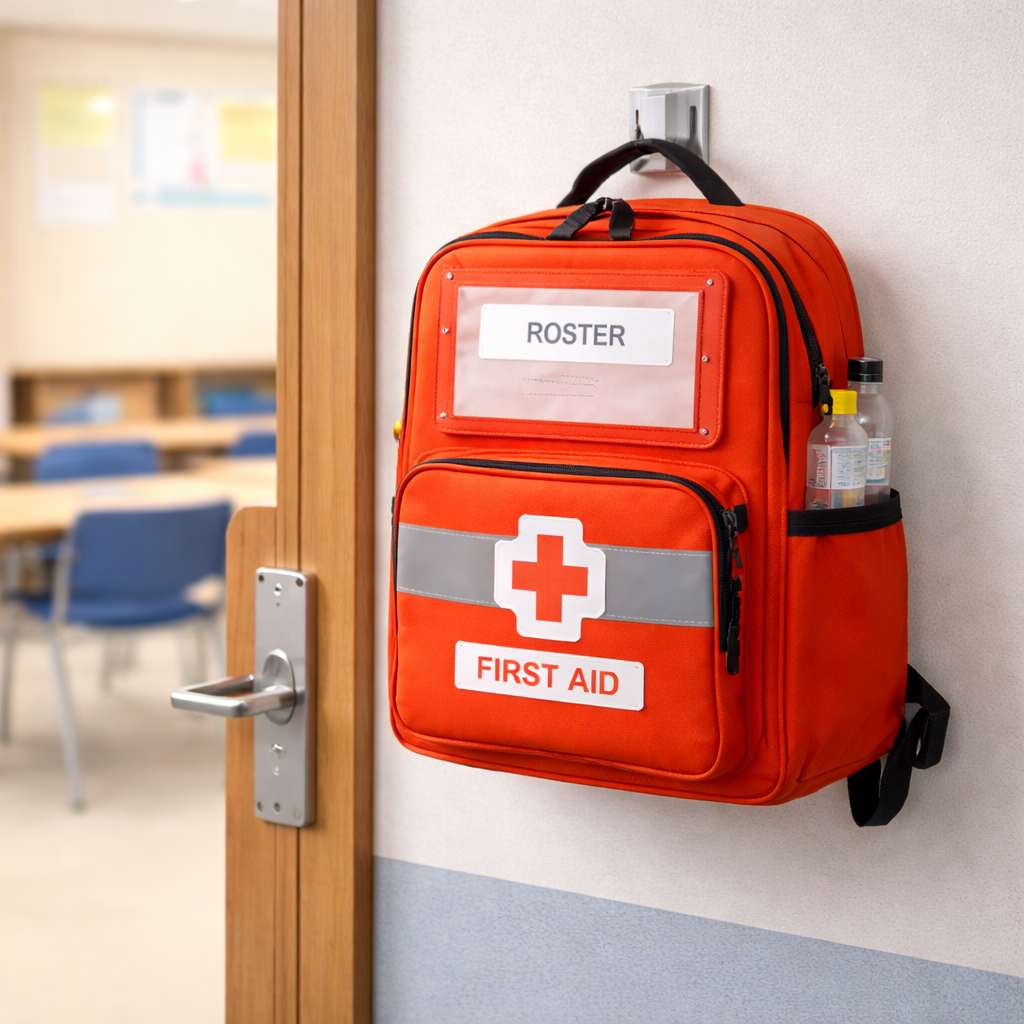
Sizing is a logistics problem that connects directly to your school's emergency operations plan. The right answer depends on how long your plan assumes the school may need to be self-sufficient, how many people occupy the campus at peak times, and what storage space is realistically available. Calculating supplies per student and staff memberWater is the clearest per-person calculation. CDC guidance recommends storing at least one gallon of water per person per day for a minimum of three days, and notes that more should be stored when possible. Some large districts operating under real storage constraints apply a lower minimum — the Los Angeles Unified School District, for example, uses a standard of one-half gallon per person per day for three days as a campus minimum, alongside normal beverage inventory. A straightforward planning formula: multiply your total campus population (students plus staff, including substitutes and regular visitors) by your chosen daily consumption rate, then multiply by your target number of days. Run this calculation before procurement, not after — having enough supplies for the actual campus headcount is the baseline the rest of the program depends on. Food follows a similar logic: a three-day supply of shelf-stable, ready-to-eat items that account for dietary restrictions and allergy considerations across your student population. Other supplies — first aid, sanitation, lighting — are sized by operational ratios and hazard assessment rather than strict per-person formulas. The school's emergency operations plan should inform these decisions. Should every classroom have its own kit?Yes. A campus-wide cache stored in the gymnasium serves long-duration sheltering and mass reunification operations. But if a classroom goes into lockdown and the building cache is two hundred yards away, that cache is functionally inaccessible. Classroom-level kits exist to cover the critical first hours of an isolated emergency — the period before the situation stabilizes and broader resources become accessible. Federal go-kit guidance from the U.S. Department of Education explicitly distinguishes between administration kits and classroom kits, and recommends that each type be stored in a secure but readily accessible location specific to its use. A practical classroom approach: a backpack or bucket kit positioned near the primary exit door, so it can be grabbed in an evacuation or accessed without entering the hallway during a lockdown. How to Prioritize Emergency Kit Spending (When Budget Is Limited)Not every school can fully fund a complete emergency kit system at once. Prioritization ensures the most critical risks are addressed first. Priority Tier 1 — Life-Sustaining Essentials
Priority Tier 2 — Operational Stability
Priority Tier 3 — Extended Support & Comfort
This phased approach allows schools to build capability over time without compromising core safety needs. How Often Should You Inspect and Restock Your School's Emergency KitsProcurement without maintenance is not a preparedness program — it's a procurement event. Emergency kits require regular, documented inspection to remain functional. Setting a maintenance schedule that actually gets followedThe most effective maintenance schedules are tied to existing institutional rhythms. Many districts schedule formal kit inspections twice per year — typically at the start of each semester, in September and in January or February. This aligns with natural checkpoints: new students enrolling, updated rosters, and the start of a new instructional period. Pairing kit inspections with activities that already happen — monthly fire drills, professional development days, or the start of each quarter — increases the likelihood that inspections happen on schedule and don't get deferred when academic demands are heavy. The responsibility for maintaining the schedule should be assigned explicitly, in writing, in the school's emergency operations plan. Distributed accountability — "someone should handle this" — reliably produces gaps. What to check at each inspectionEmergency kit maintenance checklist:
Any item that fails inspection should be replaced before the audit is closed, not noted for future follow-up. How to Rotate Expiring Supplies Without Wasting MoneyThe financial argument against thorough maintenance is real: replacing thousands of food rations and water containers on a five-year cycle is expensive. But the alternative — kits that fail during an emergency because supplies expired — is more expensive in every meaningful sense. Food and water rotation best practicesThe standard inventory management approach for emergency supplies is first-in, first-out (FIFO): items acquired earliest are used or replaced first, before they expire. For schools, this means cycling supplies out before expiration rather than replacing them all at once at the end of a shelf-life cycle. For water stored in containers that aren't factory-sealed (such as 55-gallon drums), the CDC recommends replacing the water every six months and storing it at cool temperatures, away from direct sunlight. Commercially sealed bottled water is the most reliable option for classroom kits — it carries a longer shelf life and doesn't require active rotation management. Factory-sealed water pouches work the same way, but still require inspection for packaging integrity. Schools can also route pre-expiration food donations through established food rescue frameworks rather than disposing of them. Several states have legislative protections for food donations from institutions, which reduces liability concerns and keeps usable food out of landfills. Tracking expiration dates across multiple kitsA school with 40 classrooms, each with its own kit, plus administration and campus cache supplies, is managing hundreds of individual expiration dates. Tracking this manually, without a system, invites the exact kind of oversight failure that leaves kits with expired contents. A basic spreadsheet approach — one row per item type, one column per kit location, with expiration dates and last-inspected dates — is functional and costs nothing. Barcode-based inventory software is a more scalable option for larger districts managing supplies across multiple campuses. Either approach is better than relying on memory or informal notes. Storing School Emergency Kits the Right Way
Where a kit is stored determines how quickly it can be deployed and how long its contents remain functional. Where to keep kits for fastest access during an emergencyClassroom kits should be mounted or stored near the primary exit door — accessible during an evacuation and reachable without leaving the room during a lockdown. Federal guidance on school go-kits specifically recommends positioning kits in secure but readily accessible locations. Administration kits belong in the main office or a location that functions as the incident command center during an emergency. Campus-wide caches are typically positioned in gymnasiums, cafeterias, or other spaces that serve as mass sheltering areas. One often-overlooked consideration: local fire departments, EMS, and law enforcement should know where campus caches are located and, if secured with padlocks, should have access to keys or combinations. This coordination is crucial — if school administrators are unavailable during an incident, responders still need access to those supplies. Temperature, moisture, and security considerationsHeat degrades food — fats turn rancid faster under thermal stress, and packaging integrity degrades in extreme temperatures. Kits stored in uninsulated outdoor spaces (shipping containers, sheds) in climates with hot summers need either insulation or a ventilation strategy. Moisture compromises medical supply sterility, corrodes tools, and degrades cardboard and paper components. All kit contents should be stored in waterproof containers or sealed plastic bags. Storage areas with known moisture issues are not appropriate for emergency supplies. Security needs to be balanced against access. A kit that's padlocked in a way that slows access by 60 seconds during a crisis has meaningfully lower value than one that's accessible in under 10 seconds. Test your access time. Getting Staff Trained and Prepared to Use the KitA kit is only as useful as the people who know how to use it. Training closes the gap between having supplies and being able to deploy them effectively under stress. Who should be responsible for emergency kit oversightClear, documented assignment of responsibility is the difference between a maintained program and a neglected one. Federal guidance on school go-kits calls for explicitly designated staff responsible for kit replenishment and inspection. Best practice is to assign both a primary and a backup — if the primary person is absent during the inspection window, the backup executes. The designated person doesn't have to be a dedicated safety director, though that role is appropriate for larger districts. The requirement is that the responsibility is named, documented, and understood — not assumed to be someone else's job. Teacher emergency kit list — what teachers should know about their classroom kit:
Running drills that actually prepare your teamDrills should build competence and confidence, not induce trauma. The research on school emergency drills is clear that unannounced, hyper-realistic simulations can cause lasting psychological harm in students and staff. Announced drills with structured debriefs afterward are more effective at building actual preparedness than surprise simulations designed to feel like the real thing. What effective drills include: physically opening and accessing kit contents, practicing the specific motions required to deploy sanitation equipment, walking through the accountability and reunification process from start to finish, and testing communication equipment under realistic conditions. Practice the actions that will feel unfamiliar under stress — those are the ones that break down when they matter. Documenting Your Emergency Preparedness ProgramDocumentation is the institutional memory of your emergency program. It's also what demonstrates compliance during audits and supports funding requests. Keeping records for compliance and auditsState and federal frameworks require that schools maintain a written emergency operations plan that includes the location, contents, and maintenance schedule of emergency supplies. Louisiana's statute, cited above, requires annual submission to the superintendent and annual review. Many states have comparable requirements. After-action reports following drills or real incidents are the most underutilized documentation tool in school emergency programs. A structured AAR identifies what worked, what didn't, and what specific supply or procedural gaps need to be addressed before the next event. Creating a school emergency supply list your administration will approveAn emergency supply list that gets approved is one framed in terms administrators understand: liability exposure, regulatory requirements, and available funding. Grant programs — including state-level safe schools allocations and, in applicable years, federal emergency relief funding — frequently earmark money specifically for emergency equipment and safety supplies. A supply list tied directly to available grant criteria is more likely to receive rapid approval than one framed as a discretionary safety investment. Link the supply list to the school's documented hazard assessment. Items that address identified, foreseeable risks in a specific geographic or demographic context are defensible — both to the administration and, if it comes to it, in a legal context. For a more technical breakdown of kit contents, compliance standards, and scenario-specific requirements, continue below.School Emergency Kit Checklist — Everything You Need in One PlaceOrganizing emergency supplies by category and operational location ensures the right tools reach the right place, fast. This section covers what belongs in each kit type and how to think about room-by-room distribution across campus. A complete school emergency kit checklist organizes supplies by function — hydration, nutrition, medical, sanitation, communication, and documentation — across three kit tiers: classroom kits, administration go-kits, and campus-wide caches. Tailoring contents by location and scenario prevents gaps during actual emergencies. Printable school emergency kit checklist by categoryThe following covers 20 essential items in an emergency kit for schools, organized by function:
According to the U.S. Department of Education REMS Fact Sheet on Emergency Go-Kits, go-kits should be portable, stored in secure but accessible locations, and replenished on a regular schedule by designated staff. Emergency supplies for schools: room-by-room breakdownDifferent spaces on campus serve different functions during an emergency. Supplies should reflect those functions. Classrooms are the immediate shelter environment. The classroom kit addresses the first hours of a lockdown or shelter-in-place: sanitation bucket, basic first aid, water and food for 24 hours, whistle, emergency blankets, and documentation (roster, medical alerts). According to Rancho Romero Elementary School's disaster preparedness plan, classroom emergency backpacks should be hung near the door and inspected annually. Administrative offices serve as the incident command center. This kit is larger and broader: master campus roster, incident command vests, master keys, bullhorn, two-way radios, first aid, and the full reunion and release documentation set. Per the REMS go-kit fact sheet, administration kits should also include utility shutoff procedures and a parent-student reunification plan. Gymnasium and cafeteria function as mass sheltering areas. These locations need bulk supplies: large-format water storage, mass first aid, portable sanitation stations for larger populations, thermal blankets at scale, and backup power access. School buses represent isolated mobile environments. Transit kits should include vehicular breakdown warning equipment, compact first aid supplies, thermal blankets, and physical student rosters for any students on board. The 3-Layer School Emergency Kit Model (At-a-Glance)Effective school preparedness relies on a layered system of supplies:
Each layer serves a distinct role. Gaps in any layer reduce the effectiveness of the entire system. Earthquake Kit for School — Special Considerations for Seismic ZonesSchools in seismic regions face a materially different threat environment than schools preparing primarily for weather emergencies or lockdowns. When the building itself becomes a hazard, a standard kit is insufficient. An earthquake kit for school differs from a standard disaster kit by emphasizing structural navigation tools — utility shutoff wrenches, crowbars, N95 masks, and hard hats — alongside standard water, food, and first aid supplies. Schools in active seismic zones need both a standard preparedness kit and earthquake-specific additions scaled to local fault risk. What are 10 items in an emergency kit for earthquakesAccording to USGS emergency supply guidance for earthquakes and FEMA's Earthquake Safety Checklist (B-526), earthquake-specific kit contents should include:
These items supplement, not replace, the standard emergency kit. A seismic-zone school needs both. Earthquake emergency kit for school vs. standard disaster kitThe operational difference comes down to what's assumed about the building. A standard disaster kit assumes the structure remains intact and functional — the threat is outside, and the building is the refuge. An earthquake kit assumes the building may be compromised — structural failure, ruptured utilities, blocked exits, and ongoing aftershock risk are all planning factors. This shifts the kit's center of gravity from shelter-in-place support toward extraction and outdoor survival. Tools for moving through compromised space (gloves, crowbars, hard hats) and extended outdoor exposure management (tarps, thermal blankets, water purification) take on more importance. Schools in active seismic zones should conduct a specific hazard assessment that addresses these differences and reflects them in their kit contents and EOP. School Lockdown Emergency Kit — What's Different and Why It MattersA lockdown scenario differs from a natural disaster in a specific, operationally significant way: evacuation is not an option. Students and staff must remain stationary, concealed, and quiet — potentially for hours — without access to hallways, bathrooms, or normal movement. A school lockdown emergency kit addresses the specific demands of an active threat scenario: extended confinement, sanitation without hallway access, window obscuring, and student management under extreme stress. Contents differ meaningfully from a general disaster kit, with a heavier emphasis on sanitation, concealment materials, and quiet comfort items. Lockdown-specific supplies beyond the standard kitThe sanitation component becomes critical in lockdown scenarios in a way it doesn't for short-duration events. When students cannot leave the room for hours, a functional portable toilet solution — bucket, seat, liners, deodorizer, and a privacy option — is not a luxury. It's a basic operational requirement. Window obscuring materials are also lockdown-specific. Pre-cut blackout materials (heavy construction paper, dark fabric) with duct tape for rapid application eliminate visual access through door windows without requiring staff to approach the door. Quiet comfort items — playing cards, soft fidget objects, silent reading materials — serve a practical function during extended lockdowns with younger students. Managing a classroom of frightened children for hours requires tools that don't require movement or make noise. Classroom emergency kit requirements for active threat scenariosSchools where staff have completed Stop the Bleed training or equivalent hemorrhage control training should ensure their classroom kits include the supplies that training requires: tourniquets, hemostatic gauze, and trauma shears. Training without supplies, or supplies without training, reduces the effectiveness of both. These items should be organized for rapid access — not buried at the bottom of a supply bucket. High-visibility pouches or labeled sections within the kit allow trained staff to locate and deploy them quickly. Per the American Red Cross survival kit guidance, a well-stocked kit includes first aid supplies as a core component. For lockdown-specific classroom kits, the first aid component should be calibrated to the training and the threat environment. Buying Emergency Kits for Schools in Bulk — What to Look ForOutfitting a full campus — or a district — with complete emergency kits involves procurement decisions that affect both cost and quality. The two main paths are pre-built kits and custom-configured kits. Both have real tradeoffs. Schools buying emergency kits for schools in bulk can choose between pre-built school disaster kits and custom-configured options. Pre-built kits offer simplified procurement and unified expiration cycles. Custom builds allow precise hazard matching. Cooperative purchasing contracts reduce cost and procurement complexity for both approaches. Comparing pre-built school disaster kits vs. custom-configured kitsPre-built kits are designed to serve a general school population and include common emergency supplies in a single, packaged unit. They simplify procurement and produce unified expiration dates across an entire batch, which makes future maintenance planning straightforward. The risk is that pre-built kits may not reflect the specific hazard profile of your school, your student population's medical needs, or your staff's training level. Custom-configured kits allow administrators to specify contents based on the school's emergency operations plan, local hazard assessment, and student demographics. This produces a better-matched kit but requires more upfront planning and a more complex procurement process. School disaster preparedness supplies and purchasing approaches: Many school districts reduce procurement complexity by using cooperative purchasing contracts. These programs — including Sourcewell, BuyBoard, and NASPO ValuePoint — maintain pre-negotiated contracts with emergency supply vendors that meet public-sector procurement requirements. Districts can purchase supplies through these contracts without running an independent competitive bid process. Go-kits for schools: portable grab-and-go emergency backpacksSchool emergency backpacks and go-kits for schools serve a different function than stationary classroom kits. They're designed to move with staff — during an evacuation, during a fire drill, or during a relocation to a secondary staging area. A classroom go-kit typically includes: current student roster, medical alerts, flashlight, whistle, first aid supplies, high-visibility teacher vest, and portable water. The REMS go-kit fact sheet lists age-appropriate activities, duct tape, emergency communication device, food, hand sanitizer, blankets, and pens and paper as components of a classroom go-kit. Administration go-kits are larger and more comprehensive: master keys, campus roster, reunification documentation, incident command vests, communication equipment, and the full administrative supply set needed to run an incident command function in a non-standard location. Both types should be portable enough to carry on foot and positioned for immediate access. How to Evaluate Emergency Kit SuppliersNot all emergency kits are built to the same standard. When purchasing in bulk, schools should verify:
Procurement decisions should prioritize reliability, maintainability, and transparency over convenience alone. School Emergency Preparedness Requirements — FEMA, State, and District GuidelinesUnderstanding the regulatory landscape helps safety coordinators build programs that meet compliance requirements while also serving genuine preparedness goals. The federal framework is primarily guidance-based; state and district requirements vary widely. School emergency preparedness is governed by a layered framework: federal guidance from FEMA and the U.S. Department of Education, state-specific statutes mandating planning and training, and district-level policies. Federal guidelines recommend but do not mandate specific kit contents. State laws often impose documented planning, annual review, and drill requirements. Districts add specificity through local policy. Federal guidelines and recommendations for school emergency preparednessThe primary federal framework for emergency preparedness for schools is the Guide for Developing High-Quality School Emergency Operations Plans, published jointly by FEMA, the U.S. Department of Education, and partner agencies. This guide recommends an "all-hazards" approach — a single EOP that addresses a range of threat types rather than separate plans for each scenario. Federal guidance recommends that school EOPs align with the National Incident Management System (NIMS) and use the Incident Command System (ICS) structure. This alignment ensures that when external responders arrive, the school's internal response structure uses the same organizational language and command framework. The CDC's guidance on preparing for school emergencies emphasizes developing an EOP, stocking emergency supplies, and conducting training and exercises so staff understand how to execute the plan. According to the CDC's emergency water supply guidelines, schools should store at least 1 gallon of water per person per day for a minimum of 3 days, store more when possible, and replace stored water every 6 months. How to align your kit with FEMA and district compliance standardsFEMA school emergency kit requirements are primarily found in the FEMA K-12 school EOP guide and supplementary REMS fact sheets, rather than in a single regulatory document. Alignment involves several steps: Step 1: Conduct a campus hazard assessment. Identify the most probable and highest-consequence threats for your specific geographic and demographic context. This assessment drives kit contents. Step 2: Build or update the EOP. Document kit locations, contents, maintenance schedules, and assigned responsibilities within the EOP. The kit must be part of the written plan — not an addendum managed separately. Step 3: Cross-reference against federal and state requirements. Verify that the EOP and supply program address state-mandated elements (drill frequency, documentation, review cycles) and federal guidance recommendations. Step 4: Engage local first responders. Invite local fire, law enforcement, and EMS to review the campus plan and kit contents. This collaboration identifies gaps and ensures the school's internal response capability integrates cleanly with arriving responders. Step 5: Document, train, drill, and revise. Per Louisiana Revised Statute § 17:416.16 — an example of state-level requirements that appear across many states — plans must be reviewed annually, submitted for approval, and supported by staff training and regular drills. The REMS fact sheet reinforces that replenishment responsibilities should be explicitly assigned and that kits should be maintained on a documented schedule. Per the CDC emergency medical kit checklist for children with special healthcare needs, schools should check food expiration dates at least twice per year, replace stored water every 6 months, and update medical records and special needs documentation annually. Compliance Reality CheckThere is no single federal law that defines a required list of emergency kit contents for schools. Compliance is typically evaluated based on:
Emergency kits support compliance, but compliance depends on the full system — planning, training, documentation, and execution. Frequently Asked Questions
FAQHow often should a school emergency kit be restocked?School emergency kits should be formally inspected at least twice per year — typically at the start of each semester. Per CDC guidance on emergency kit maintenance, food expiration dates should be checked at least twice annually, water should be replaced every six months if not factory-sealed, and medical and personal records should be updated once a year. Batteries should be tested and replaced on a regular schedule. Any item that fails inspection should be replaced before the inspection is closed. Who is responsible for maintaining emergency kits in a school?Responsibility should be explicitly assigned — by name or role — in the school's emergency operations plan. Per REMS go-kit guidance, the plan should include procedures designating which staff members are responsible for kit replenishment. Best practice is to assign both a primary and a backup to prevent gaps when the primary person is absent. Documentation of each inspection — date, findings, actions taken — supports compliance and audit readiness. What is the most important item to include in a school emergency kit?Water. The CDC's emergency water supply guidance recommends at least 1 gallon per person per day for a minimum of 3 days, with more stored when possible. After water, a first aid kit, emergency blankets, and current student documentation (roster and medical alerts) form the next tier of essential items. Per the American Red Cross, a complete survival kit also includes a flashlight, battery-powered radio, extra batteries, and sanitation supplies. What are the 20 essential items every emergency kit for schools should include?Based on guidance from the CDC, the American Red Cross, the REMS go-kit fact sheet, and Ready.gov, a complete school emergency kit checklist — school disaster kit supplies list — should include:
How do you build a school emergency preparedness kit that meets FEMA and state district requirements?A school emergency preparedness kit that meets federal and state requirements starts with the school's all-hazards EOP. Per FEMA's K-12 school EOP guide, the kit should reflect the specific threats identified in the campus hazard assessment. Contents should use the REMS go-kit fact sheet as a baseline for both administration and classroom kits, then be customized for population, climate, and local hazard profile. Storage locations, maintenance schedules, and assigned responsibilities must be documented within the EOP itself. Training and drills validate the system. Per Louisiana Revised Statute § 17:416.16 — representative of requirements across many states — plans should be reviewed annually and submitted to district leadership for approval. What's the difference between a school disaster kit, a classroom emergency kit, and a school emergency backpack?A classroom emergency kit is a stationary kit positioned in the classroom — often a bucket kit near the door — designed to support students during the first hours of a lockdown or shelter-in-place event. A school emergency backpack (go-kit) is a portable kit carried by staff during an evacuation or relocation, containing rosters, first aid, and immediate communication tools. A school disaster kit is the campus-wide bulk supply cache, stored centrally and designed to support the full campus population during multi-day events. Per the REMS go-kit fact sheet, schools should maintain both classroom and administration go-kits; the central cache addresses large-scale and extended-duration needs. How many emergency supplies per student should schools stock for a 72-hour school emergency kit?For a 72-hour school emergency supply list, water is the clearest per-person calculation. The CDC recommends at least 1 gallon per person per day — 3 gallons per person for 72 hours. Some districts operating under storage constraints apply a lower minimum: LAUSD's standard is 0.5 gallons per person per day as a campus minimum, plus normal beverage inventory. Food should cover three days of shelf-stable, ready-to-eat items that account for dietary restrictions. Other supplies — sanitation, lighting, first aid — are sized by operational ratios and hazard assessment rather than strict per-person formulas. What should a school earthquake kit include compared to a standard school emergency preparedness kit?Compared to a standard school emergency preparedness kit, an earthquake kit for school includes additional structural navigation and extraction tools. Per USGS earthquake supply guidance and FEMA's earthquake safety checklist, earthquake-specific additions include utility shutoff wrenches, crowbars, N95 dust masks, hard hats, fire extinguishers, water purification tablets (for potentially compromised water infrastructure), and heavy-duty tarps for outdoor sheltering if the building is condemned. The standard kit assumes the building is intact; the earthquake kit plans for scenarios where it isn't. Where can schools buy bulk emergency kits and emergency supplies for schools at a discount?Bulk emergency kits for schools are most efficiently purchased through cooperative purchasing programs, which maintain pre-negotiated contracts with emergency supply vendors and satisfy public-sector procurement requirements without requiring an independent competitive bid. Common cooperative purchasing networks include Sourcewell, BuyBoard, NASPO ValuePoint, and OMNIA Partners. State-level cooperative contracts (such as Utah's PA4874 school and public safety contract) may also offer qualifying suppliers. Schools should verify that any vendor's products meet the quality and content standards outlined in their EOP before purchasing. How do you create and maintain a 14-day emergency kit list for a large school or school district?A 14-day emergency kit list for a large school moves beyond standard campus-level preparedness into district-level logistics. The CDC recommends storing water toward a two-week supply where possible; at 1 gallon per person per day, a district serving 500 people needs 7,000 gallons for 14 days. At that scale, water storage shifts from pouches and jugs to 55-gallon drums or larger institutional systems. Food shifts from 72-hour calorie bars to freeze-dried long-term storage options. Per FEMA's K-12 school EOP guide, a tiered supply model — classroom kits for immediate needs, site caches for multi-day operations, district warehouse stock for sustained operations and resupply — is the most operationally practical approach at this scale. Maintenance at this volume requires digital inventory tracking with scheduled rotation cycles and documented FIFO protocols. DisclaimerThis information is provided for general awareness and planning purposes. For emergencies, contact local emergency services immediately. Emergency preparedness procedures and regulations vary by location and change over time. Schools should verify current requirements with their state education agency, local emergency management office, and relevant authorities. Consult qualified safety professionals and follow your district's specific emergency operations plans when implementing emergency preparedness measures. Content TransparencyThis article was human-authored by the SOS Survival Products team based on over 30 years of real-world experience and trusted resources in the emergency preparedness field. |


.jpg)